Navigating an Eviction in Palm Beach County: The Complete Landlord's Guide
No landlord wants to evict a tenant. It's stressful, time-consuming, and expensive no matter how it goes. But understanding the process clearly — and following it precisely — is the difference between regaining your property in 45 days or 90+ days.
Palm Beach County's eviction process follows Florida state statute (Chapter 83), but local court procedures, filing conventions, and timeline realities have specific characteristics that every landlord in the county should understand before they ever need to use this information.
This guide is not legal advice. For your specific situation, always consult a licensed Florida real estate attorney. This is an educational overview of how the process typically works.
Before You File: The Three Most Common Mistakes
Most eviction delays happen before a single court document is filed. Here are the three mistakes that routinely set landlords back by weeks:
Mistake #1: Improperly Counting the 3-Day Notice Period
When a tenant fails to pay rent, Florida law requires you to serve them with a "3-Day Notice to Pay Rent or Vacate" before you can file for eviction. Sounds simple. The mistake is in counting those three days.
Florida statute specifies that you exclude the day the notice is served, and you exclude weekends and holidays from the count. So if you serve the notice on a Thursday, the three days are: Friday (Day 1), Monday (Day 2, skipping Saturday and Sunday), Tuesday (Day 3). You cannot file until Wednesday.
Courthouses are strict about this. An incorrect notice is grounds for immediate dismissal of your eviction case, forcing you to start over. This mistake alone can cost you 2-3 weeks.
Mistake #2: Accepting Any Payment After Serving the Notice
Once you've posted a valid 3-Day Notice, do not accept partial payment from the tenant — not $100, not $500, nothing. In Florida, accepting payment after posting a notice for nonpayment is widely treated as a waiver of that notice, meaning you would need to serve a new notice and restart the timeline.
If a tenant offers partial payment and you desperately need some cash flow, consult an attorney first. There is a specific written procedure for accepting partial payment without waiving your right to continue the eviction, but it must be done in a documented and legally precise way.
Mistake #3: Using the Wrong Notice for the Wrong Situation
Not all evictions start with a 3-Day Notice. Florida has different notices for different circumstances:
- 3-Day Notice to Pay or Vacate: Used when the tenant owes unpaid rent.
- 7-Day Notice to Cure: Used when the tenant has violated a lease provision (unauthorized pet, unauthorized occupant, noise complaints) and you are giving them a chance to fix it.
- 7-Day Unconditional Quit Notice: Used for serious, repeated, or incurable lease violations. The tenant must leave — there is no "cure" option.
- 15-Day Notice: Used when you are terminating a month-to-month tenancy without cause.
Using the wrong type of notice for your situation will result in the case being dismissed.
The Filing Process in Palm Beach County
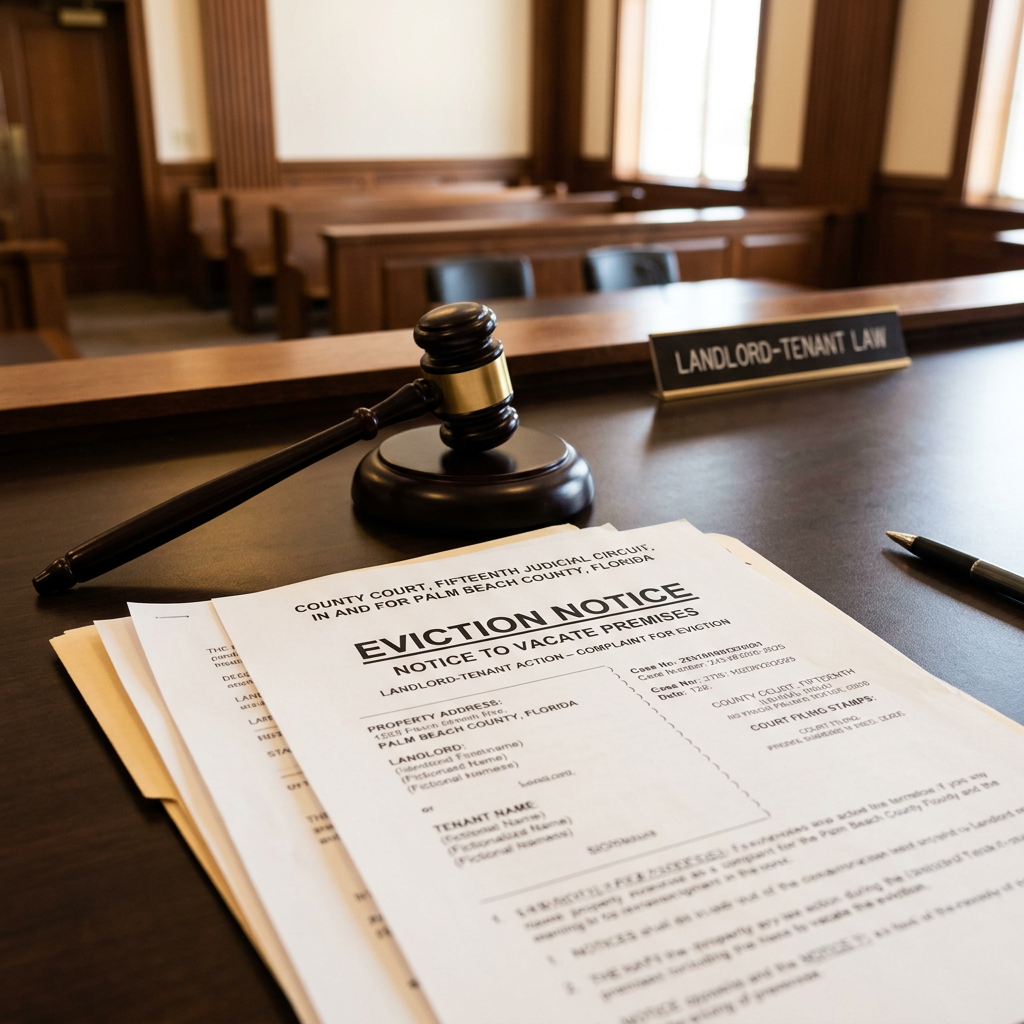
Once your notice period has properly expired and the tenant has not complied, you file the eviction complaint with the Palm Beach County Clerk of Courts. The filing happens at the Main Courthouse at 205 N. Dixie Highway, West Palm Beach, or online through the eFiling portal.
What you file:
- The formal Complaint for Eviction (available from the court or drafted by your attorney)
- A copy of the lease agreement
- A copy of the properly served notice
- The filing fee (currently approximately $185 for a residential eviction in Palm Beach County — verify current fees with the clerk)
After filing, the clerk issues a summons, which is served on the tenant by the Sheriff's office or a certified process server. The tenant then has 5 business days to file a written response with the court.
After the Summons: What Happens Next
If the Tenant Does Not Respond (Default):
If the tenant does not file a written response within 5 business days of receiving the summons, you file a Motion for Default with the court. If the judge grants the default — which is typical in straightforward nonpayment cases — a Final Judgment for Possession is entered in your favor.
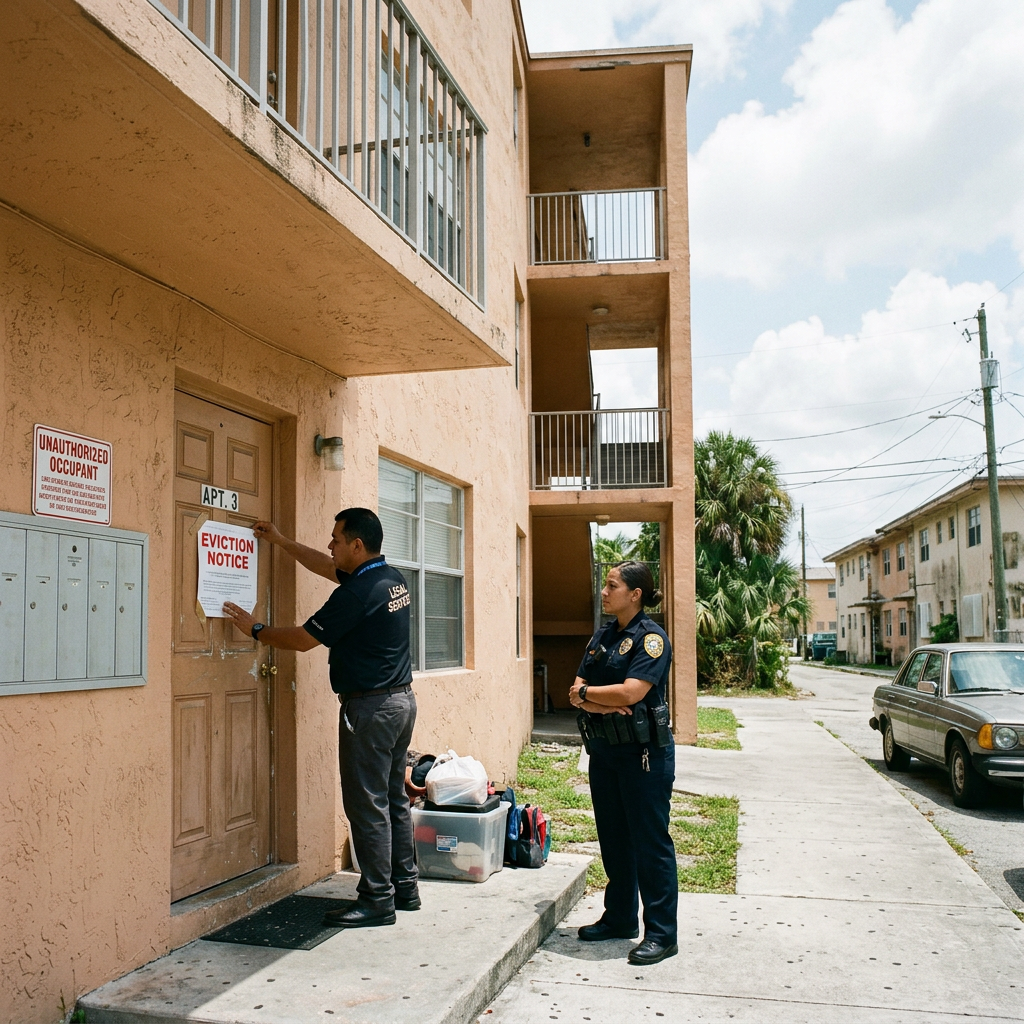
The clerk then issues a Writ of Possession, which is served by the Palm Beach County Sheriff. The Sheriff posts a 24-hour notice to vacate at the property. If the tenant is still present after 24 hours, the Sheriff returns with you (the owner) to supervise the physical removal.
If the Tenant Files a Response:
If the tenant responds — contesting the eviction, claiming the notice was defective, or raising a "rent withholding" defense claiming habitability issues — the case is set for a hearing before a county court judge. The timeline extends to 3-6 weeks for a hearing date, and the outcome depends on the specific facts and documentation presented.
This is why proactive documentation is so important. If you have photos of the property condition, records of all maintenance requests and completions, and organized rent payment history, you are in a significantly stronger position at hearing than a landlord who arrives with a shoebox of disorganized papers.
Rent Withholding: The Defense That Delays Everything
Florida law gives tenants the right to withhold rent if a landlord has failed to maintain the property in compliance with the Florida Building Code and fails to repair conditions that materially affect the health and safety of the tenant.
If a tenant raises this defense, the court will typically order the disputed rent to be deposited into the court registry while the case is heard. Even if you ultimately win, the process is significantly lengthened.
The best defense against a rent withholding claim is simple: respond to maintenance requests quickly, keep written records of every repair, and don't allow habitability issues to fester. A property manager who documents maintenance properly protects landlords from this tactic.
Realistic Timelines for Palm Beach County Evictions
- Uncontested (tenant doesn't respond): 25-45 days from the day you post the initial notice to the day the Sheriff shows up with the Writ.
- Contested (tenant files a response): 60-90+ days, depending on the docket and the nature of the defense raised.
- Appealed cases: Can extend well beyond 90 days.
These timelines assume no procedural errors. Any defect in the notice, summons, or filing process resets the clock.
After Possession: The Tenant's Belongings
This is an area where landlords frequently create legal exposure post-eviction. Once the Sheriff executes the Writ and you take possession of the property, you cannot simply throw the tenant's belongings in a dumpster.
Florida statute requires that you provide the tenant with written notice of their belongings and a reasonable opportunity to retrieve them before disposal. The specific requirements have evolved — consult a Florida attorney for current guidelines — but ignoring this step can result in a lawsuit for the value of the belongings left behind.
The Real Cost of Eviction
Beyond attorney and filing fees, a single eviction typically costs a Palm Beach County landlord:
- Lost rent during the proceeding: $2,500–$7,000+
- Legal fees: $800–$2,500+
- Make-ready costs for the vacated property: $1,000–$5,000
- Re-leasing/vacancy costs: $500–$2,000
Total: $5,000–$16,000+ per eviction
The only real defense against a rent withholding claim is simple: respond to maintenance requests quickly, keep written records of every repair, and don't allow habitability issues to fester. A property manager who documents maintenance properly protects landlords from this tactic.
At The Property Management Doctor, comprehensive tenant screening is the foundation of everything we do. If you'd like to learn more about how we protect Palm Beach County investors from bad tenants and costly evictions, reach out for a free consultation.
Written by The Property Management Doctor
Property Management Expert
Our team of experienced property managers and real estate investors shares insights to help you maximize your rental portfolio's performance.